
Union Township City Directory Holdings
Union Township city directory research begins with county and rural collections. No verified annual Union Township city book, reverse directory, or named telephone-directory run was found. The known volumes record a wider Clermont County world of townships, post offices, farms, villages, and households. That matters when a search uses Glen Este, Mt. Carmel, Summerside, or another community name instead of a current address. The table separates confirmed runs from sources that merely provide supporting context, so an unlisted year is not mistaken for a gap in a continuous publication.
| Collection | Years | Where held | Access |
|---|---|---|---|
| Gazetteer and Directory of Clermont County, Ohio | 1882 | CCPL facsimile; CCGS/Batavia | Library-use collection and index |
| Thirey & Mitchell’s Encyclopedic Directory and History | c. 1896 | Cincinnati & Hamilton County Public Library | Digitized scan; some pages are imperfect or absent |
| Thirey & Mitchell’s reprint | 1902 original; 2002 reprint | CCGS/Batavia | Library-use reference, 232 pages |
| McPherson’s Rural Mail Directory | 1932-1934 | CCGS, call R 383.145 MCP | Library use |
The regional digitized directory collection shows the kind of historical material available through the Cincinnati library system.
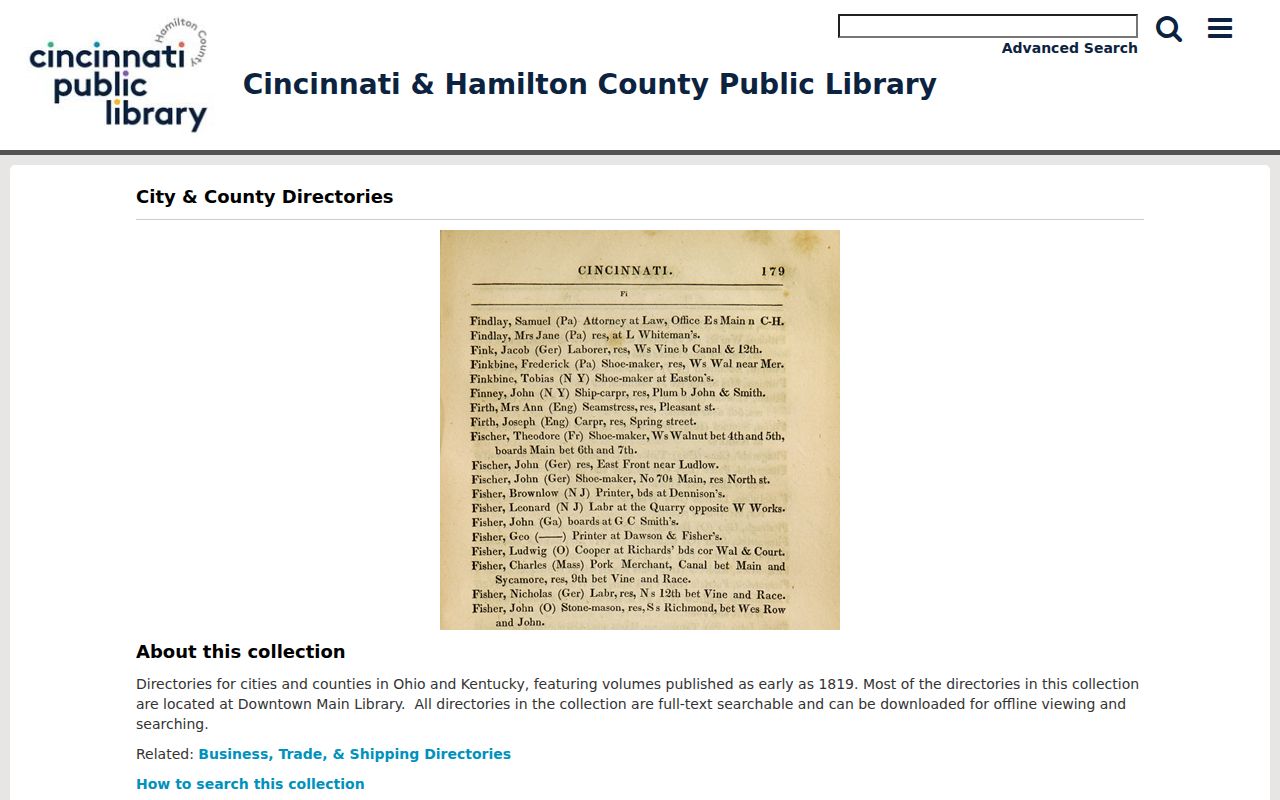
The image is a useful reminder to check the catalog description and the volume itself before treating a regional directory as a Union Township household list.
Why Union Township Directory Records Lead
The local directory record is a rural household table, not a street-by-street city volume. In the observable Thirey & Mitchell pages, Union Township households use post-office or community labels, including Glen Este, Mt. Carmel, and Summerside. The record can identify a person within a township setting and may connect that person to acreage, a school district, or a direction from the county seat. It is strong family-history evidence when paired with land and census sources. It is weak evidence for a claim about who occupied a present-day numbered address.
The distinction is more than a naming preference. Union Township began as an unincorporated township and its historical communities grew into suburban Greater Cincinnati corridors. A current mailing label may say Cincinnati, Amelia, Batavia, or Milford, while nineteenth-century material uses a post office or road. Record the exact wording in the volume, then use maps, a parcel trail, and deed descriptions to determine whether two place names can be connected. Note: a missing modern address in an older directory does not prove the household or land was absent.
The Clermont County Historical Society is another research-assistance route for records, artifacts, publications, and material undergoing digitization.
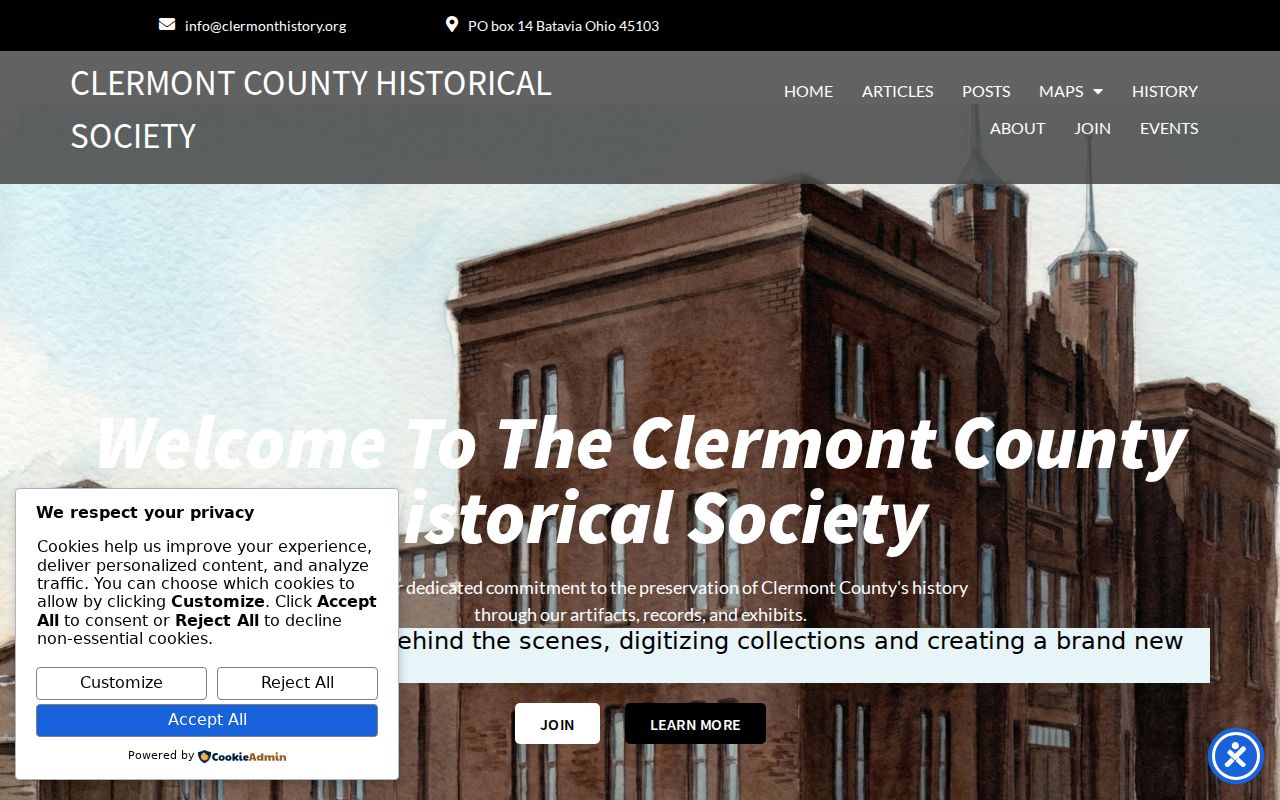
Its current move and digitization work make it sensible to ask about availability before relying on a particular item.
Union Township Directory Volumes
The 1882 Bancroft volume supplies a county locality and name baseline. CCPL has a facsimile, and the Clermont Gazetteer and Directory Index compiled by Patsy M. Shiveley can help locate an entry. The c. 1896 Thirey & Mitchell volume is available as a digitized scan through the Cincinnati library. It carries a household table with far more context than a name alone, although the research inspection found imperfect scanning and missing pages. The 1902 original survives as a 2002 CCGS reprint, with village listings, plats, and householder detail.
McPherson’s 1932-1934 rural-mail directory makes a useful later bridge. It does not turn the collection into a full annual run, but it can connect a family from the older township books toward later property, obituary, and cemetery research. Keep the source and date beside each fact. The county’s online Recorder material begins with documents recorded in 1980, so older land questions need the Recorder counter, Records Center, or CCGS deed indexes rather than a blank web result.
- 1882: Bancroft’s county gazetteer establishes an early locality and name baseline.
- c. 1896: Thirey & Mitchell records rural household and community details in a digitized, imperfect scan.
- 1902: The later Thirey & Mitchell volume adds village listings, plats, and householder information.
- 1932-1934: McPherson’s rural-mail directory provides a later household and mail-route bridge.
Reading a Union Township City Directory
A Union Township city directory entry should be read as a dated description of a household in a rural county table. The inspected Thirey & Mitchell entries display the resident’s name, post office, owned or rented acreage, school district, directions or distance to the county seat and post office, land value, township, birthplace and year, migration timing, and a printed activity description. Those fields can distinguish two people with similar names. They do not establish a modern street address by themselves.
| Resident name | The household identity printed in the table. |
|---|---|
| Post office | The historic community label, which may differ from a current mailing city. |
| Acreage and land value | Context for a rural household, not a substitute for a parcel number. |
| School district and direction | Locality clues that can be compared with maps and plats. |
| Township and birthplace data | Additional identifiers for separating similar names. |
Photograph or transcribe the column headings as well as the row. The meaning of a short label can change from book to book, and a physical copy may clarify a damaged page in the digital scan.
Union Township Directory Fields
Some common directory terms need a local translation here. A householder index identifies the person or household under a chosen arrangement of names. A criss-cross directory normally lists addresses in street order, but no verified Union Township reverse or criss-cross run was found, so do not assume one exists. An abbreviation key is the volume’s own explanation of compressed labels. For a rural table, the post office and acreage may carry more value than a house number that was never printed.
- Post-office community
- A historical delivery or community label, such as Glen Este or Mt. Carmel, rather than proof of present jurisdiction.
- Householder table
- A list organized around a named household and local context, not a complete census of every resident.
- Criss-cross directory
- A street-order lookup format; it is useful when present, but no confirmed Union Township run was identified.
- Abbreviation key
- The legend printed in a volume that explains its shortened labels and should be kept with any transcription.
That caution prevents a false match when an old community, a new subdivision, and a postal city share the same broad area.
Union Township City Directory Shelf
The deepest local shelf is the Clermont County Genealogical Society collection at the Batavia/Doris Wood Branch, 180 S. Third Street, Batavia. CCGS maintains books and indexes for wills, estates, guardianships, marriages, births and deaths, deeds, courts, military material, cemeteries, census, maps, surname files, obituary cards, and county newspaper microfilm. Reader-printers, a copier, and computers are available there. Its physical catalog can search Title, Author, Call Number, Description, Surname, Place, or all listed fields. Alternate-spelling and secondary-surname options are particularly useful for old local names.
Clermont Library genealogy assistance offers limited lookup help for specific records, including obituaries, death dates, certain monument inscriptions, early marriage dates, and older will, estate, or guardianship material. The service takes one ancestor per form and lists a per-copy charge. More extensive research may be referred elsewhere. The Union Township Branch is a convenient starting point for general library service, but the specialized genealogy collection is at Batavia.
Batavia became a FamilySearch Affiliate Library on September 2, 2025, expanding in-library genealogy access alongside the CCGS collection. That recent change is useful when a directory reference leads to a catalog image or a family-history source that needs an affiliate-library session. It does not make every historical directory searchable from home, so confirm the current collection conditions before planning a visit.
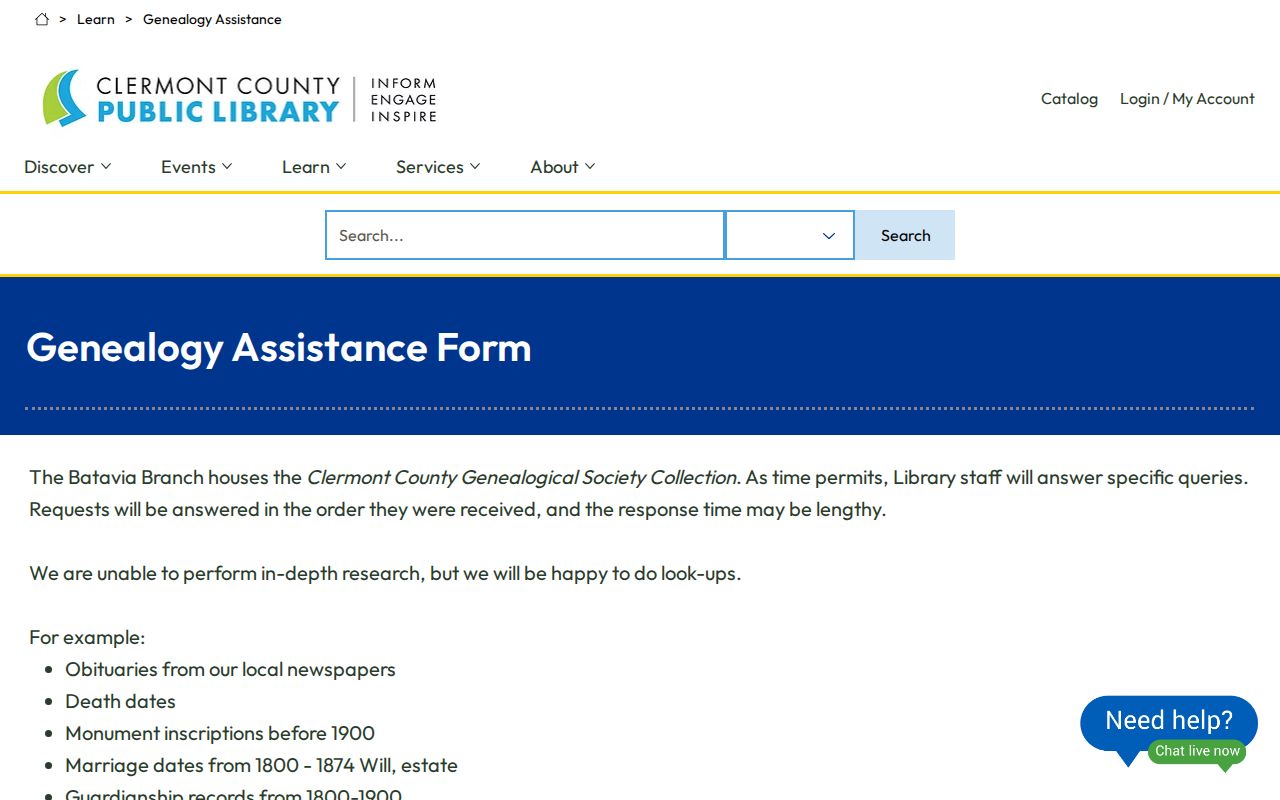
A focused request with a full name, a community label, and an approximate date makes a limited lookup more likely to reach the right collection.
Union Township Directory Cross-Checks
Directory work gains strength when it ends with an independent record. CCGS reports a searchable obituary database and a cemetery database covering many Clermont County cemeteries. The obituary tool takes surname and given-name terms, while the cemetery search uses county, cemetery, and surname fields. For active Mt. Moriah research, CCGS directs users back to the Township’s own burial-record resource. County newspapers on microfilm run from 1814 forward at CCGS, and the Cincinnati Enquirer historical archive can add regional notices through 2009.
The CCGS obituary index supplies a surname-based lead to a death or notice.
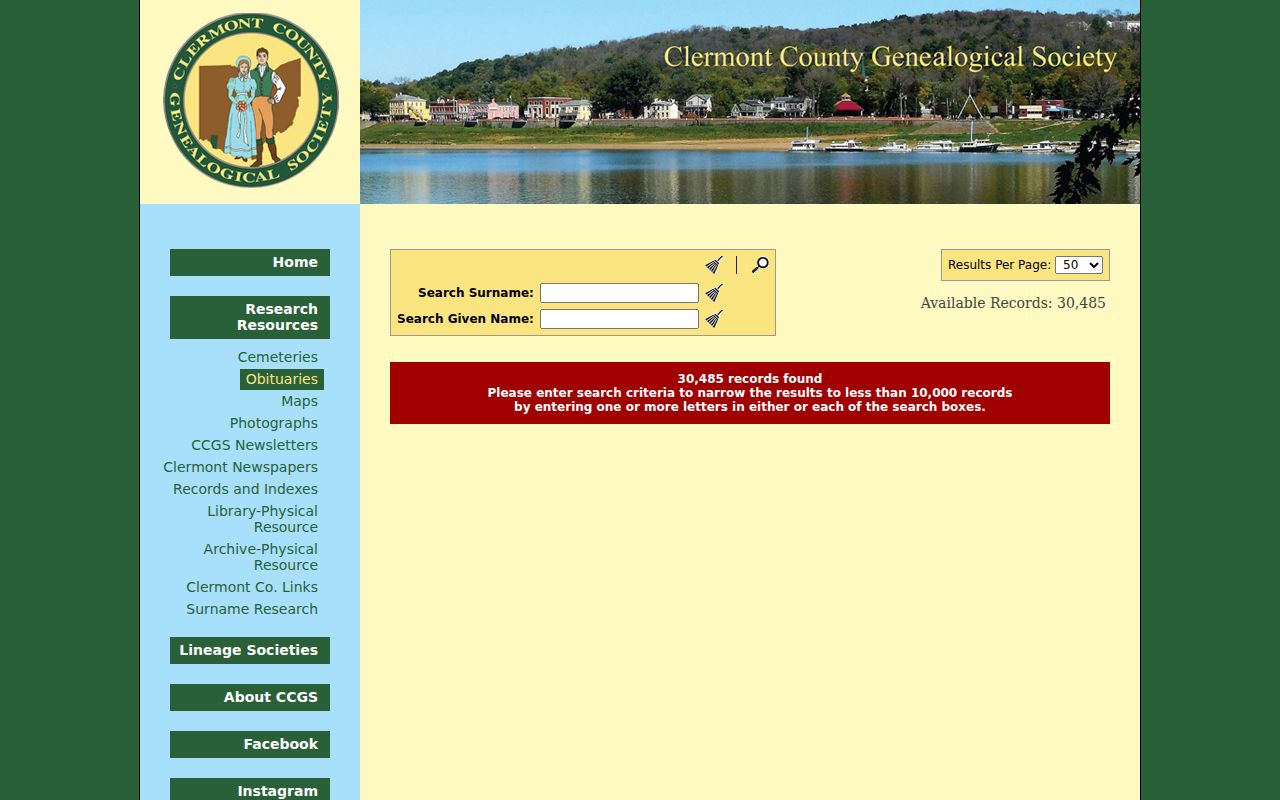
An obituary index result is a lead, not proof of the exact directory household, so compare dates, community, relatives, and associated records.
The CCGS cemetery database offers another countywide name and burial lead.
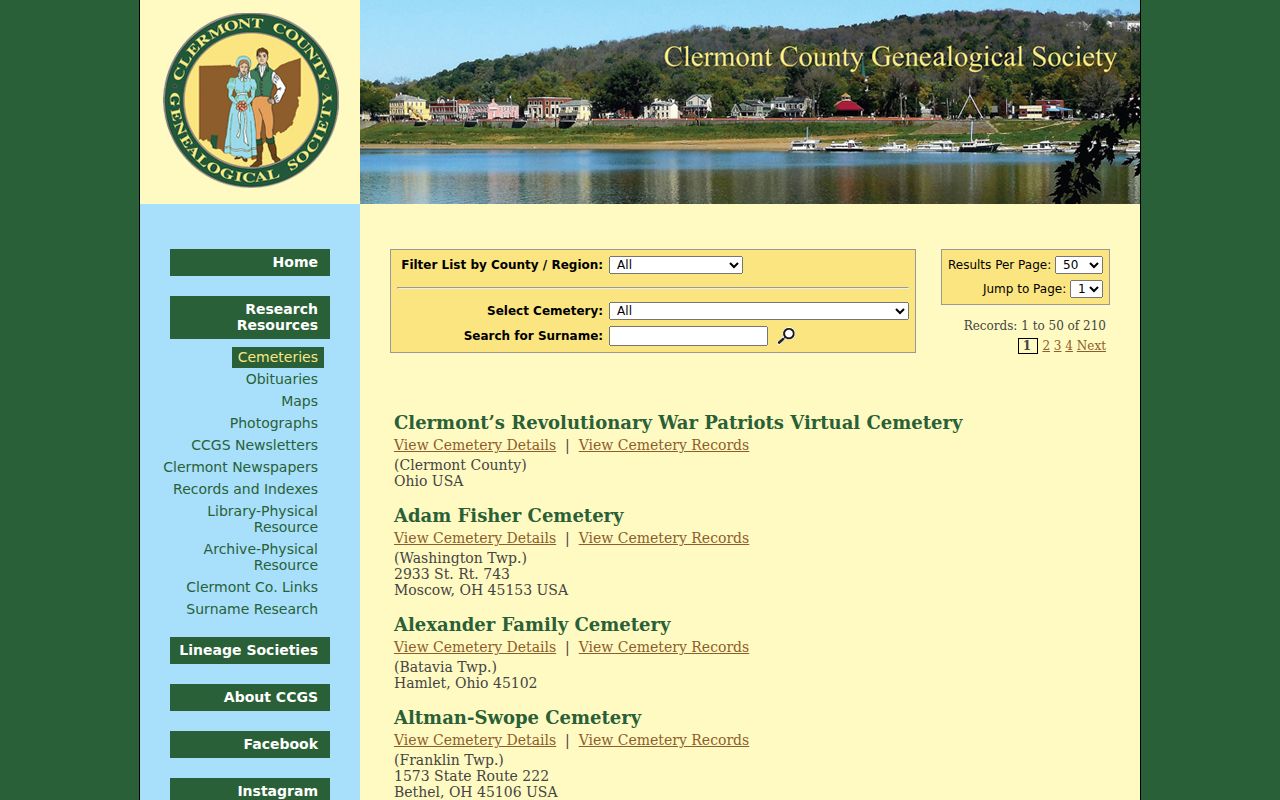
Pairing an entry with a cemetery or obituary record can narrow a family trail without converting either source into a complete resident list.
Trace Union Township Directory Decades
A household trail starts with the newest dependable parcel, deed, or known family fact and moves backward into the rural books. Preserve spelling variants, community names, and legal land descriptions as you go. The federal census provides another timed check, with released schedules through 1950 at the time of research. Township property-owner maps from about 1870 and 1891, tax duplicates, deeds, probate, cemetery records, and newspapers fill different parts of the timeline. Once a historical identity needs a present-day confirmation, the Union Township resident lookup route keeps the task focused on the matching official record.
- Start with a documented name, parcel, post office, or community, and record the spelling exactly.
- Search the 1882, c. 1896, 1902, and 1932-1934 collections that fit the time period.
- Compare the household fields with a map, deed description, tax duplicate, or census release.
- Search surname variants in the CCGS catalog and description index before deciding a name is absent.
- Close the trail with probate, an obituary, a cemetery record, or a newspaper notice when the evidence supports it.
Union Township’s historical labels often describe a township, a post office, or acreage. They are valuable precisely because they preserve the local geography that a later postal address can hide.