
Union Township Neighbors Block Sources
Public records can describe the block around a Union Township address, but each source has a narrow job. Parcel geometry establishes physical adjacency. Auditor cards describe property ownership and tax information. A Recorder index can place deed parties in time. Permit and zoning records can document a project at an address. The state voter tool confirms one named person only. None of those records makes a verified list of renters, household members, friends, or all of your neighbors.
| Block source | Useful evidence | Access boundary |
|---|---|---|
| Clermont General Online Maps | Adjoining parcel geometry, PIN, and mapped context | Shows physical adjacency, not a social relationship. |
| Clermont Auditor parcel card | Owner, situs, tax mailing, sales, tax, map, and value fields | No renter or current-household roster. |
| Clermont Recorder | Recorded grantor, grantee, document type, and date | Documents title parties, not present occupancy. |
| Permit Central and zoning | Address-based project, applicant, owner, work, and timing clues | Not a directory of people on a block. |
| Ohio voter search | One known person's registration context | No public street-wide browse; protected data is excluded. |
| Police Neighborhood Watch | Township neighborhood discussions and a contact route | No member directory was found. |
Read the fields literally. A parcel owner can be an individual, trust, business, or institution. A tax-mailing address can differ from the property address. A land-record party can be a past owner. Those distinctions keep a Union Township neighbor lookup accurate and narrow.
Map Union Township Neighbor Parcels
For the immediate block, use General Online Maps to locate the target by address, parcel ID, owner, or road. Its documented tools include identify pop-ups, layers, aerial or street basemaps, measuring, drawing, and printing. Select the target polygon, then click only polygons that share a boundary or are directly relevant to the question. Record each parcel identification number before opening its Auditor record. A PIN is more reliable than a postal-city label when an address may use Cincinnati, Amelia, Batavia, or Milford as its mailing city.
- Find the target address, parcel ID, owner, or road in the mapped search tools and confirm the physical parcel.
- Use the identify tool on adjoining polygons, recording each PIN and the map relationship rather than assuming nearby streets mean adjacent land.
- Open the related Auditor card and compare the parcel's situs, legal description, owner table, and tax-mailing field.
- Use the Recorder only when a dated title or document question remains, checking the legal description or PIN rather than street wording alone.
Parcel geometry proves where land meets. It does not prove who lives there, whether the owners know one another, or who belongs to the same household.
- PIN
- The parcel identification number used to connect the Auditor card, GIS map, tax records, and land-record research.
- Situs address
- The physical location of the property. It is different from the address where tax mail is sent.
- Legal description
- The lot, plat, acreage, or other formal land description that helps confirm a deed concerns the same parcel.
For a whole named street rather than the immediate block, use the Union Township street directory and its address-by-address record chain.
Note: A tax record or owner field can support a land question, but it does not identify the people who currently occupy the property.
Union Township Neighbor Parcel Cards
Each adjoining PIN deserves a separate review. The Auditor's current property card can show the owner table, physical situs, tax mailing fields, legal description, sales and transfers, tax district or neighborhood, appraisal and value fields, permits, sketch, tax map, survey, and printable record-card links. It also offers Proximity Search or Neighborhood Sales for property comparison. That feature compares property information. It does not establish a social connection among Union Township neighbors.
The Clermont County Treasurer provides the county tax-search route and related payment information.
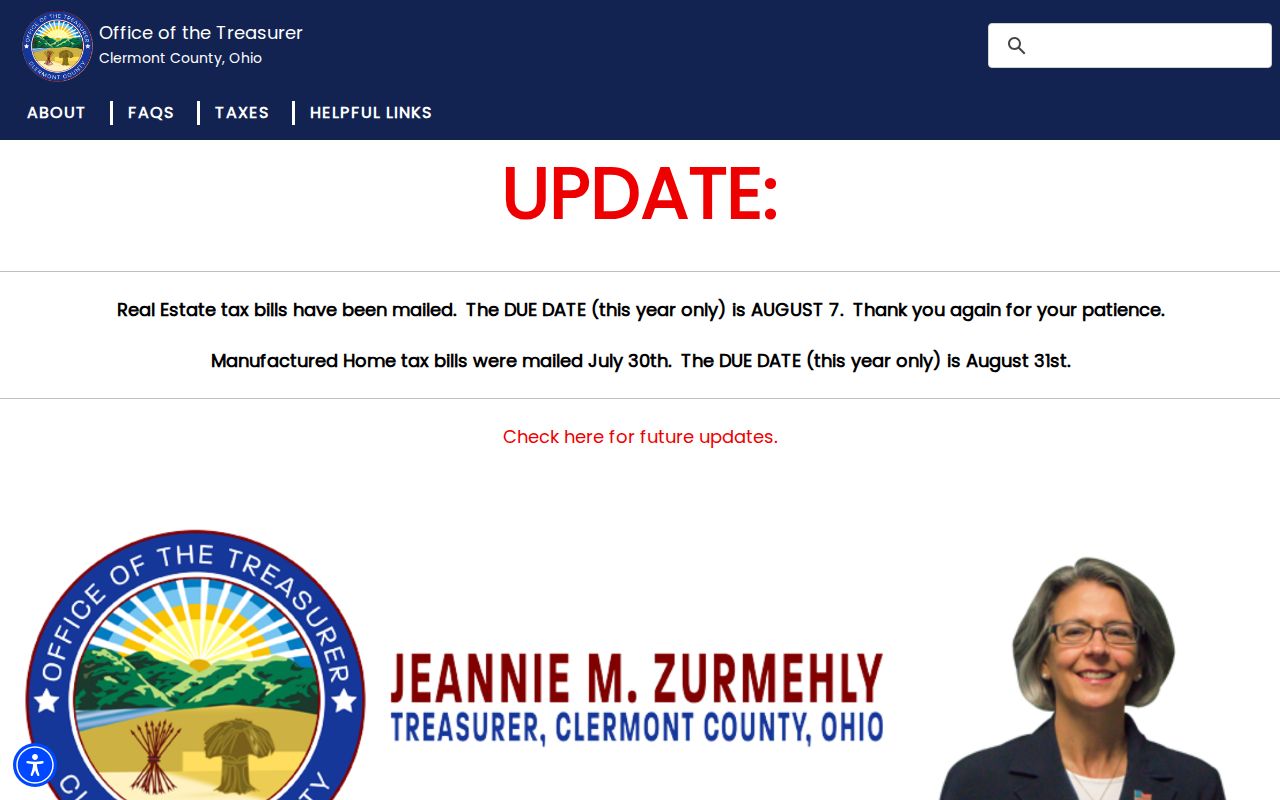
Tax records can help distinguish a parcel's tax status from a claim about occupancy. Reappraisal and ownership data change, so preserve the date of a record review when a block question depends on timing.
| Official record evidence | What it cannot establish |
|---|---|
| GIS and Auditor records connect land, parcel data, owners, and recorded property details. | They do not identify every current resident, renter, visitor, or relationship on the block. |
| Official documents can be checked with the responsible county office and tied to a date or PIN. | Commercial neighbor-lookup categories may combine public and commercial data, so their completeness, recency, and person matching cannot be assumed. |
Union Township Deed and Permit Clues
When a parcel card raises a title question, move from the PIN or legal description to the Recorder's CountyFusion index. Confirm the grantor or grantee role, recorded date, instrument type, and book, page, or document reference. The Recorder states that online real-estate documents begin in 1980. Older instruments require a Recorder, Records Center, or genealogical-collection follow-up. A name on a deed is evidence of a recorded legal role at a point in time, not proof of current residence.
The Recorder's FraudSleuth service is a free alert option for new property-recording activity.
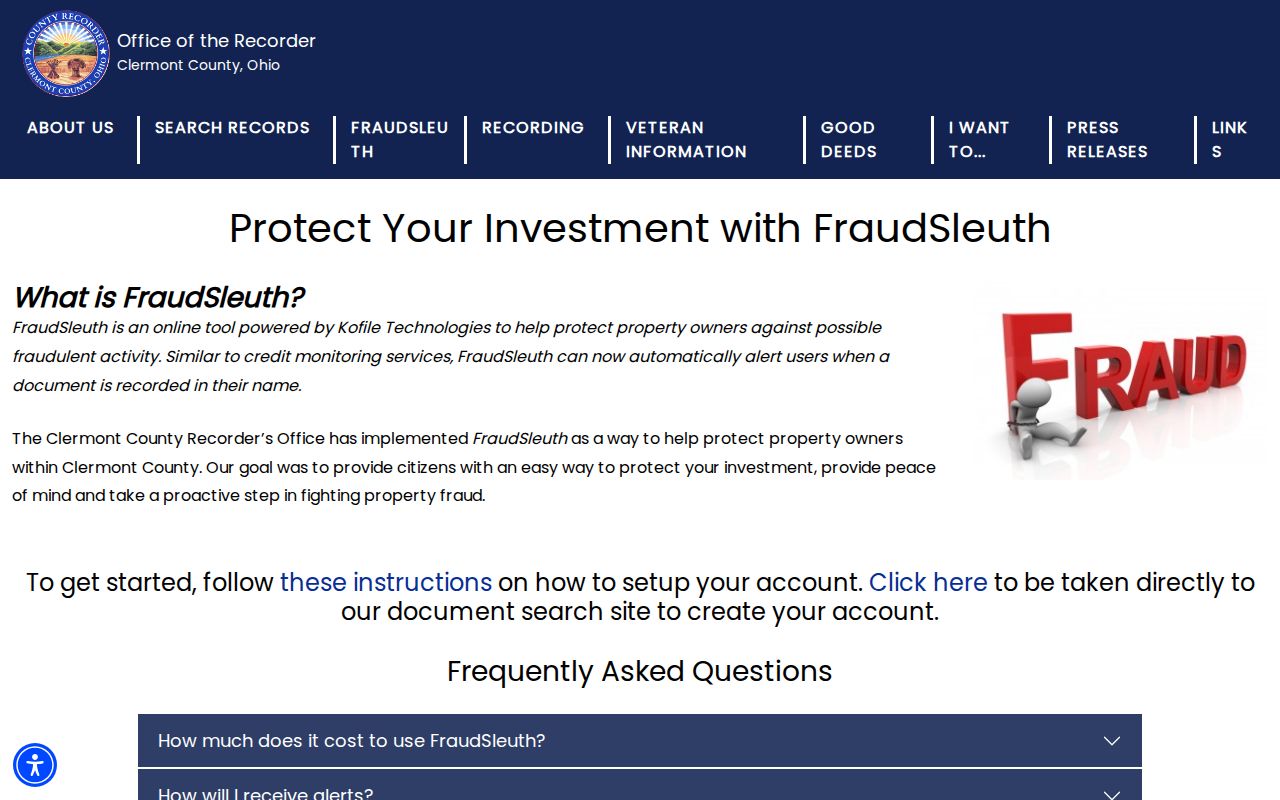
FraudSleuth is not a title search. Its local guidance calls for separate exact profiles when a name has variants or nicknames, and an alert should lead to review of the recorded document.
Permit Central is another address-based clue. County guidance reports public Building Inspection and Public Health permit or inspection material from January 2019 forward. Search a permit, plan, or inspection by record number first, then address or parcel ID. Results can document project timing and may show a permit number, application name, address, work type, dates, or owner-primary. Those entries do not establish a block roster.
The Union Township document archive retains public township material that can add a dated civic or project context.
Township agendas and board materials can clarify zoning, BZA, CIC, or address history, but they are public proceedings rather than neighborhood membership records.
One-Person Checks for Union Township Neighbors
Ohio's My Voter Information search is a one-person confirmation tool. It requires first name, last name, and county, so it cannot be used as an address-only or street-wide search. For a known person, the public context can include registration, residence, precinct, polling place, districts, and voting-history information. Compare the result with an independently dated property, deed, or court record before treating it as the same person. Voting history never reports ballot choices.
Safe at Home registrations, phone and email fields, Social Security and driver or state-ID information, and other protected voter information are excluded from public access. Daily county snapshots are public-record files with their own restrictions, not a license to assemble an informal list of neighbors.
Note: A voter record may confirm one registrant's election context, but it cannot prove the members of a private household.
Union Township Neighborhood Watch
No authoritative umbrella directory of Union Township homeowner associations, neighborhood associations, block clubs, congregational rosters, or civic-club members was located. The verified community route is the Township Police Neighborhood Watch program, which offers neighborhood-group discussions. It is a way to ask about a local safety or communication concern, not a directory of households or members.
Police Neighborhood Watch
Township Police offers discussion access for local neighborhoods. Call 513-752-1230 to ask about the program and its current availability.
Township Public Information
Police reports, meeting records, and township archives can document public activity, but they do not identify association members or residents.
The Union Township Community Outreach Programs page describes the Neighborhood Watch contact route.
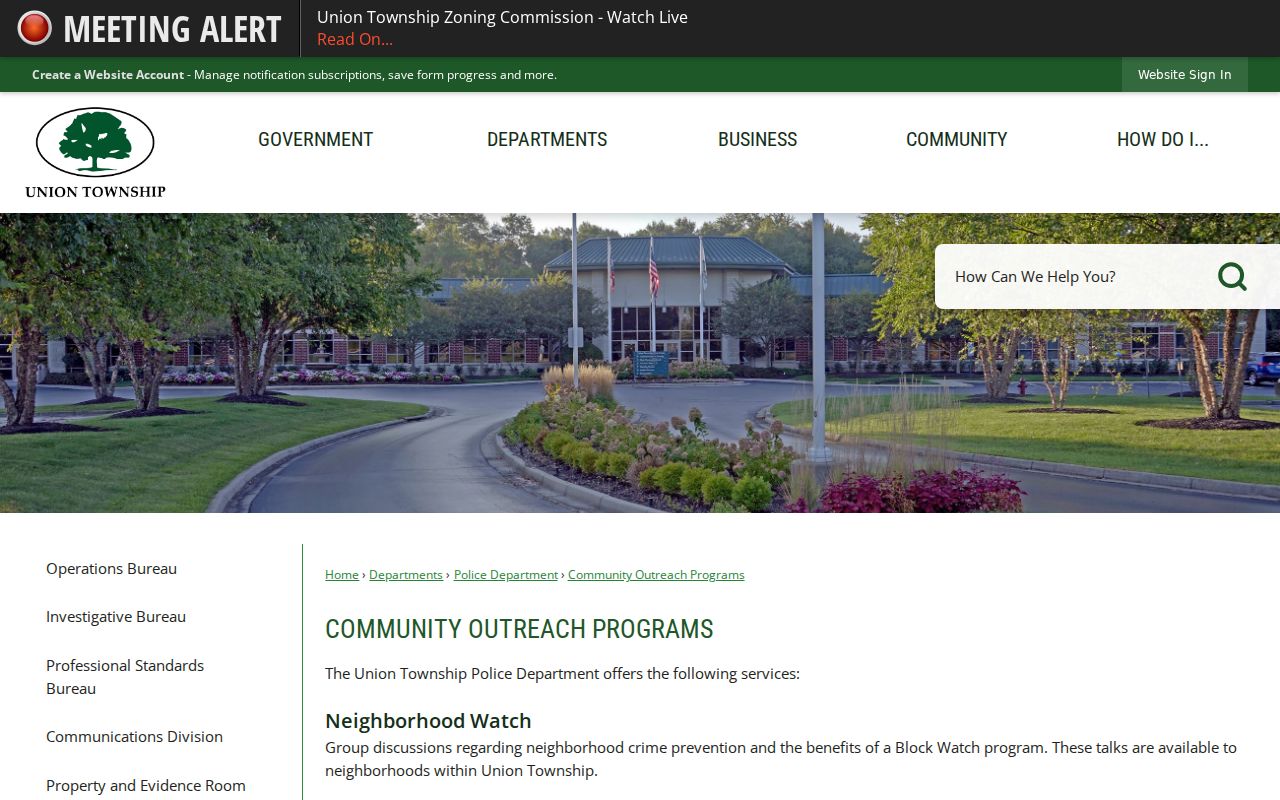
Use the program to connect through the appropriate local channel, not to infer who participates or where a participant lives.
The Union Township Police public reports portal is a separate public-information route.
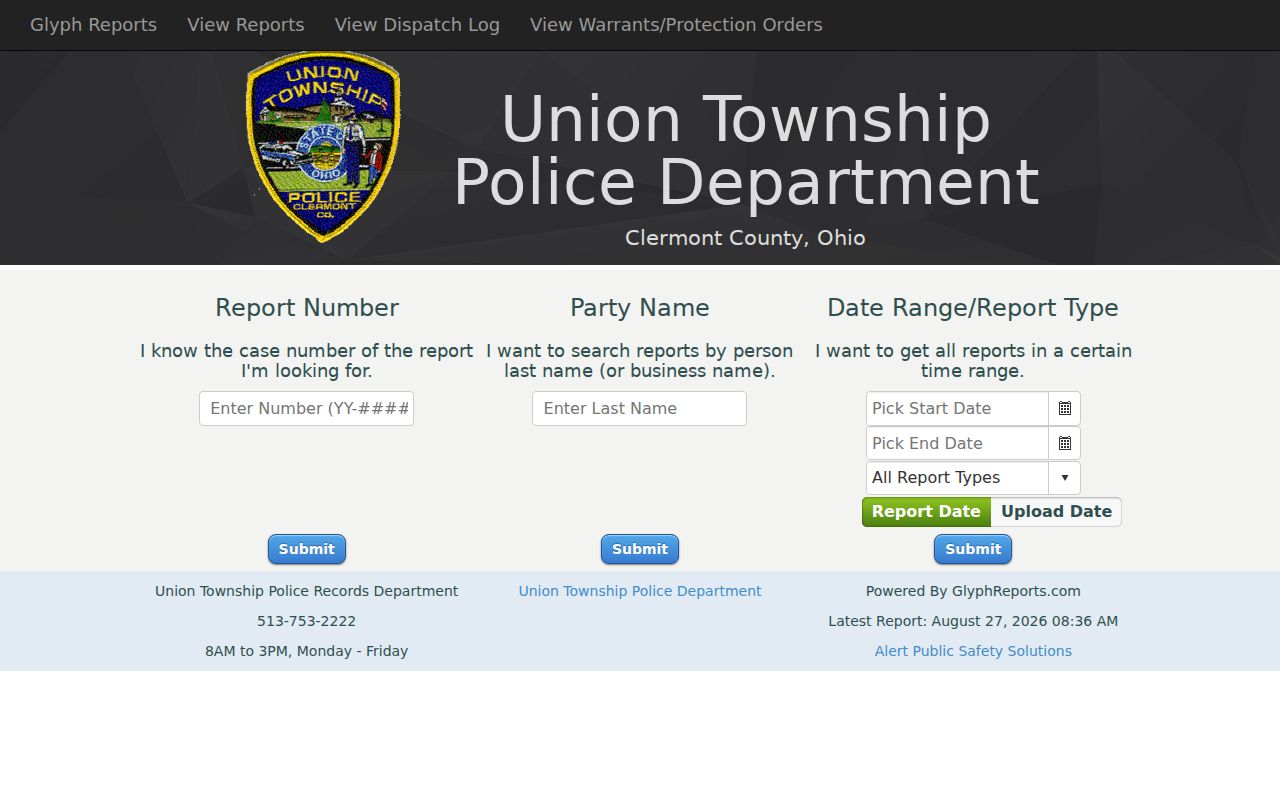
A public report can have access and redaction limits. It is not evidence of a person's residence or participation in a neighborhood group.
Neighbor Lookup Privacy Limits
A block search must stop where the public record stops. The parcel map, Auditor, and Recorder systems do not publish a verified renter or household-member roster. Utility customer data and Ohio motor-vehicle addresses are not public substitutes. Safe at Home protects qualifying participants through a substitute-address program, and protected voter information is not available through the public search. A blank result may be a privacy rule, an older record held in person, or an indexing difference.
Lawful use. Use a Union Township neighbor lookup for personal, lawful reasons such as property curiosity, reconnecting, civic context, or a focused safety question. Ohio law prohibits stalking, harassment, intimidation, and misuse of confidential Safe at Home information.
If an official record contains an error, seek correction from the custodian. Do not try to defeat a lawful redaction or confidential-address protection.
Union Township Records Requests
For a dated address incident or a record that is not searchable online, begin with the office of origin and describe the request precisely. Ohio's public-records law permits requests for responsive records, but exemptions and redactions still apply. Include the address, date or date range, record type, and whether inspection, email, paper, or another delivery method is preferred. Clermont 911 has a separate request route for incident detail, 911 audio, and radio traffic, with retention and delivery rules that are different from property or voter records.
The Clermont 911 public-records request form is the official channel for those emergency-communications requests.

The form asks for request details and preferred delivery; it is an address-and-date evidence route, not a neighbor directory. Clermont 911 says audio and reports can require up to 72 hours and that 911 audio and radio traffic are retained only 90 days. Its listed copy costs are $0.05 for black-and-white, $0.10 for color, and $1 for a CD. Start with the correct custodian so the request can be searched accurately.
Note: Give the address and exact date range first, because a narrow incident request is more useful than a broad inquiry about a block.