
Union Township Previous Residents by Era
Past residents of one Union Township property are found through an era-specific chain. The current parcel is the handoff point. The Recorder’s web index can carry a land trail backward to 1980, while earlier documents and local indexes need a Batavia office, archive, or genealogy collection. A directory entry may place a household in a rural post-office community but may not name a modern address. Federal census schedules, maps, tax duplicates, probate, obituaries, and cemetery records can test whether a person or family belongs to the same land trail.
| Source | Years it covers | Where held | What it shows |
|---|---|---|---|
| Auditor and GIS parcel record | Current public dataset | Clermont County Auditor and General Mapping | Starting PIN, current situs and legal description, ownership field, and mapped parcel. |
| Recorder online real-estate documents | 1980 to present | CountyFusion and Recorder | Recorded deed and instrument trail, parties, dates, and land reference. |
| Permit Central public material | January 2019 forward | Citizen Self Service | Property activity and dated permit or inspection context. |
| McPherson Rural Mail Directory | 1932 to 1934 | Clermont County Genealogical Society | Rural household and mail-route context. |
| County directories | 1882; circa 1896; 1902 | CCPL, CCGS, and digitized regional collection | Post office, township, land, and household setting. |
| CCGS deed index | 1800 to 1880 | CCGS and Recorder route | Older title and party trail. |
| Tax duplicates | 1821 to 1991 | Clermont County Records Center | Taxable land and name continuity. |
| Federal census | Released schedules through 1950 | National Archives and genealogy access | Household composition at decennial points. |
| Township property-owner maps | Circa 1870 and circa 1891 | Township, CCGS, and Ohio History Connection | Road, parcel-owner, and community geography. |
Choose the source that matches the date instead of forcing every question through a current web index. A record that is absent from a modern portal can still be held by the Recorder, the office that created it, the Records Center, or a library collection.
Start Union Township Previous Residents With Land
Use the Clermont County Auditor’s combined search to locate the physical address, PIN, legal description, and present public ownership field. Preserve the difference among situs address, tax mailing address, and legal description. The situs is the physical land location. A tax mailing address tells the county where a notice is sent. The legal description identifies the land in formal parcel or plat terms and is the safer handoff when old street wording changes.
Next, open the same PIN in Clermont General Mapping. County mapping can identify the parcel polygon, road, PIN, owner and mailing attributes, tax district, values, sale details, and Auditor hyperlink. Its layers also help check township geography. This is crucial in Union Township because a postal label can read Cincinnati, Amelia, Batavia, or Milford even though the parcel sits in the township. Do not treat a mailing city as a replacement for the mapped jurisdiction.
A PIN is the parcel identification number. A plat is a recorded map or plan showing divisions of land. Together with the legal description, they help distinguish the same property from a nearby or similarly named address.
Trace Union Township Previous Residents in Deeds
The Clermont County Recorder holds the county’s recorded land material and directs public real-estate searching through CountyFusion. Work backward from today’s land record. A recorded deed follows legal parties and land, so it can establish transfers and dates. It does not prove that every deed party lived at the property. Compare each party result to the legal description, lot, plat, or PIN rather than relying only on a street name or a repeated surname.
- From the Auditor card, copy the PIN, legal description, current owner field, and the most recent transfer information.
- Enter the relevant party in CountyFusion. The Recorder’s guidance says name-only searching is most complete, and broader surname or initial searches can help with uncertain spelling.
- Open the recorded transfer lead and record the parties’ roles, document type, recording date, document number or book and page when supplied, and land reference.
- Search the seller as an earlier grantee, then compare the legal description or lot and plat before continuing to an older transfer.
- When the trail reaches the web cutoff, ask the Recorder, Records Center, or CCGS about the older physical record and deed-index route.
- Grantor
- The party conveying an interest in a recorded instrument.
- Grantee
- The party receiving that recorded interest.
- Chain of title
- The linked sequence of land transfers for the same legal property.
- Legal description
- The formal land wording that checks whether deeds refer to the same parcel even when a street label changes.
Source image: the Clermont County Recorder is the county’s official route to recorded land documents.
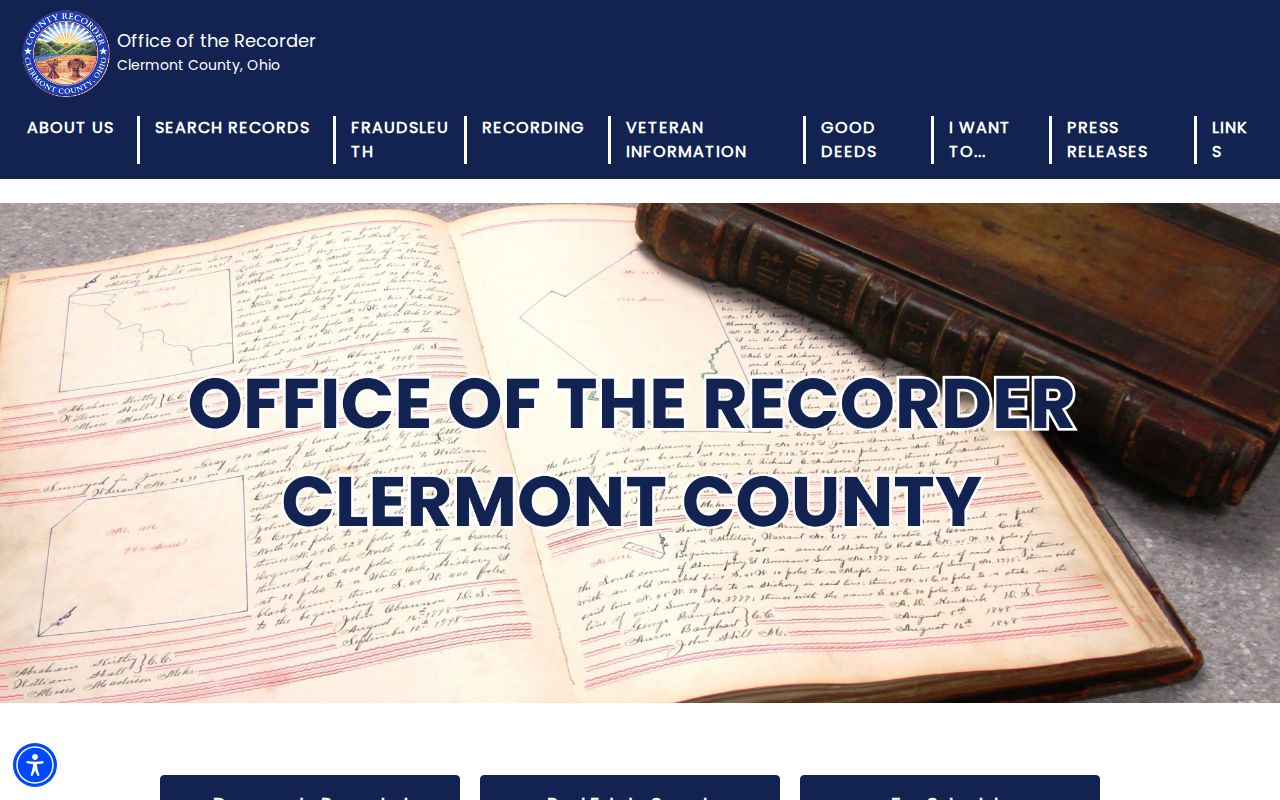
The Recorder is the right custodian for the transfer trail after the Auditor has supplied a reliable parcel anchor.
Union Township Previous Residents and CountyFusion
CountyFusion begins with a disclaimer and login gateway. Its verified public guidance identifies name or party searching as the main route and documents separate recorded-document, book or page, and instrument-number paths. The live research inspection did not expose every dropdown option, so a search should use the current portal for available document-type and date controls rather than assuming them. Record the tool’s result fields cautiously: party names and roles, document type, recording date, document number or book and page, legal-description cross-reference where supplied, and available image access.
Source image: the Recorder’s CountyFusion search instructions explain the official entry route.
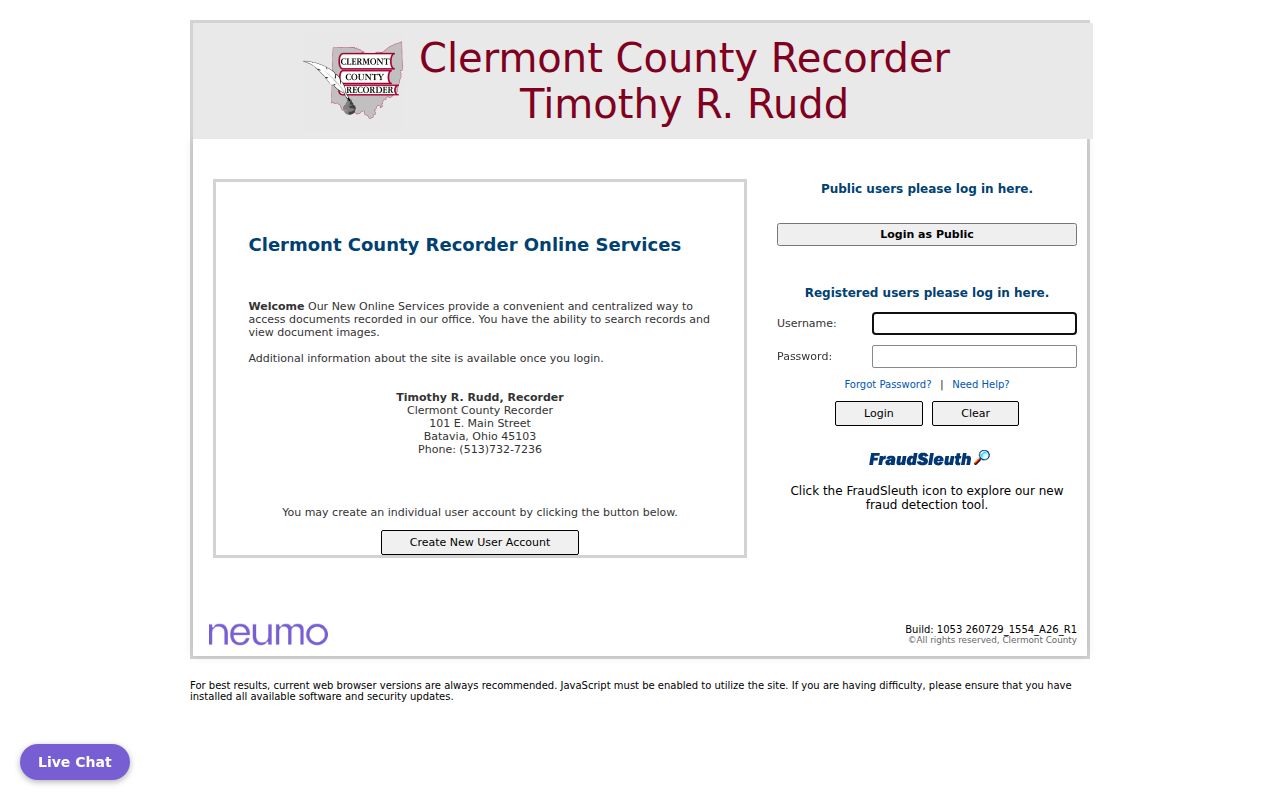
Using broader name variants and then checking the land reference helps keep a Union Township deed trail from turning into a same-name guess.
Union Township Previous Residents Before 1980
The Recorder states that its online real-estate documents begin in 1980. That web cutoff is a comparison point, not the start of Clermont County land history. The Recorder’s permanent responsibility reaches early county records, while older material and records not online are held through the Batavia office and archival channels. CCGS provides a deed-index route for 1800 through 1880, and the Records Center lists historic tax duplicates, journals, plat books, and other retained county material.
For a record that is older, ask first which office created it. The Records Center says public-record requests should begin with the office of origin, and its request form is helpful but not required. Give the known name, property, and approximate date. The Recorder, Clerk, Probate Court, Public Health, and Records Center are separate custodians, so the best counter or request route depends on the type of record sought.
Source image: the Recorder’s frequently asked questions document the online real-estate coverage limit.
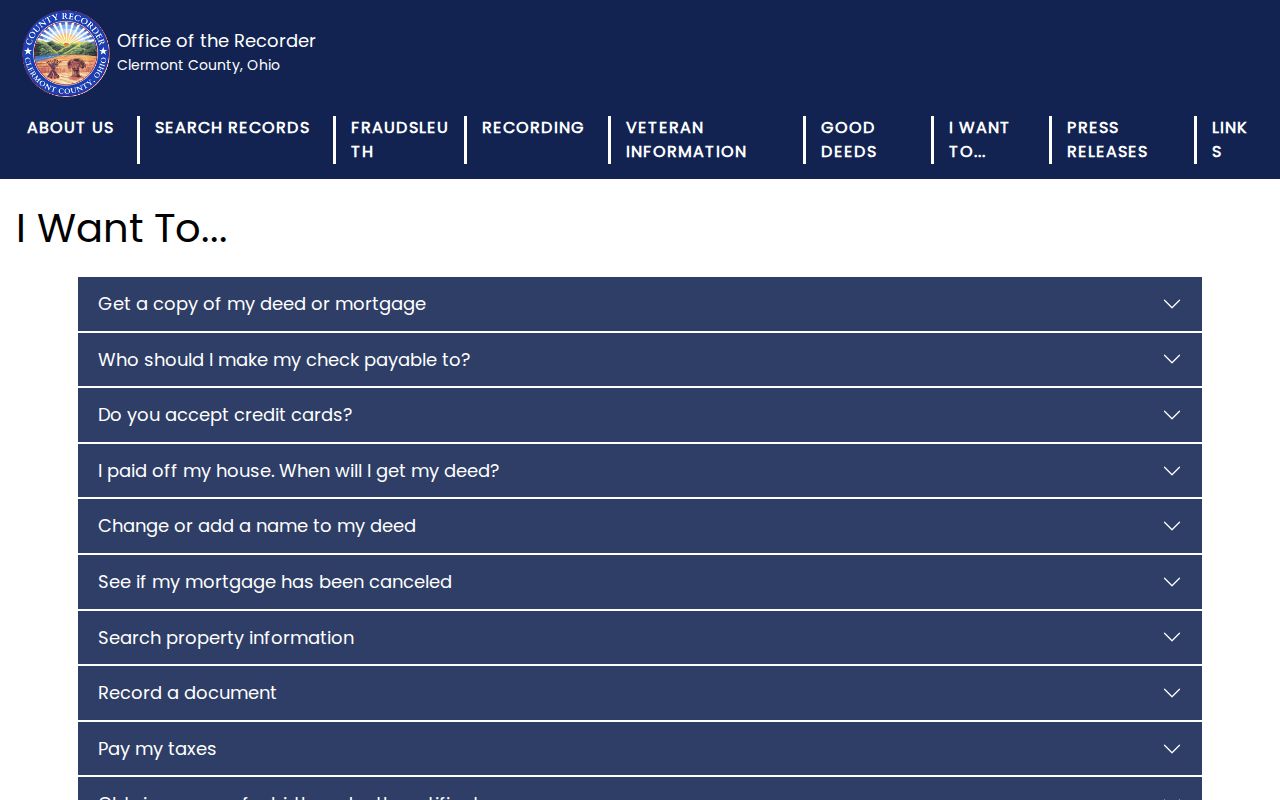
The documented cutoff is a signal to change access channels, not a reason to conclude an earlier transfer never happened.
Note: Older Union Township research often requires an office counter, archival inquiry, or library-use index in addition to the online Recorder search.
Rural Sources for Union Township Previous Residents
Union Township was historically rural, so its useful historical directory sources are county and rural household tables, not a verified annual Union Township city directory or reverse-address volume. The 1882 Gazetteer and Directory of Clermont County, the circa-1896 and 1902 Thirey & Mitchell directories, and the 1932 through 1934 McPherson Rural Mail Directory can place a person in a post office, township, land, school-district, or community setting. They do not reliably translate a person into a modern house number.
The circa-1896 Thirey & Mitchell table visibly includes name, post office, land-status and acreage information, school district, distance and direction, land value, township, birthplace and year, migration timing, and occupation. Its Union Township examples use Glen Este, Mt. Carmel, and Summerside labels. A current address missing from such a table does not prove that the household or land was absent. It may use a post office, road, acreage, or historic community name instead.
Use the Clermont County Public Library genealogy resources and the CCGS collection to pair rural directories with deeds, maps, tax duplicates, probate, obituary, cemetery, and newspaper material. The confirmed collections and their access details are concentrated in the Union Township city directory resource, while this address trail uses them only to test an earlier household.
Pair Union Township Households With Census Years
A past household layer should be added after the land trail is stable. Federal census schedules released through 1950 can show household composition at ten-year points. Pair a rural-directory entry with the nearest census year, then compare the post office or township, age pattern, land clues, and surname variants with the deed and tax trail. A directory hit and a census hit are useful corroboration, but neither alone proves continuous occupancy between dates.
- Anchor the property with a PIN, legal description, historic map, or tax-duplicate reference.
- Locate the matching rural-directory period and record the post office, township, and any land or route context.
- Check the nearest released federal census for the household and geographic context.
- Test names against deeds, probate, obituaries, cemetery records, and newspaper notices before connecting them to the same land.
- Write down conflicts, including a changed post office, altered road name, or an uncertain legal-description match.
This sequence is especially important for Withamsville, Tobasco, Mt. Carmel, Summerside, Tealtown, and Glen Este, where older descriptions can be tied to community or road language instead of today’s postal label.
Map Union Township Previous Residents Carefully
Historic map work helps prevent a false match. Union Township’s Maps page offers circa-1870 and circa-1891 township maps, and CCGS identifies historic property-owner maps as a resource. Overlay the old road or community context with the legal description, plat, tax duplicate, and current PIN where possible. Do not make up a countywide renumbering to explain a mismatch. No authoritative source established one for Union Township.
Some address-continuity records belong in the Recorder’s instrument categories rather than in a directory. The Recorder lists street-name changes, annexation petitions, centerline surveys, and street or alley vacations. The township’s June 13, 2023 agenda records a vacation of part of Banks Road. It is a specific lead for a road segment, not proof that all Union Township addresses changed. Ask the Recorder or Planning and Zoning for the appropriate road, plat, or resolution record.
Source image: the Recorder’s recorded-document categories show that land records can include more than deeds.
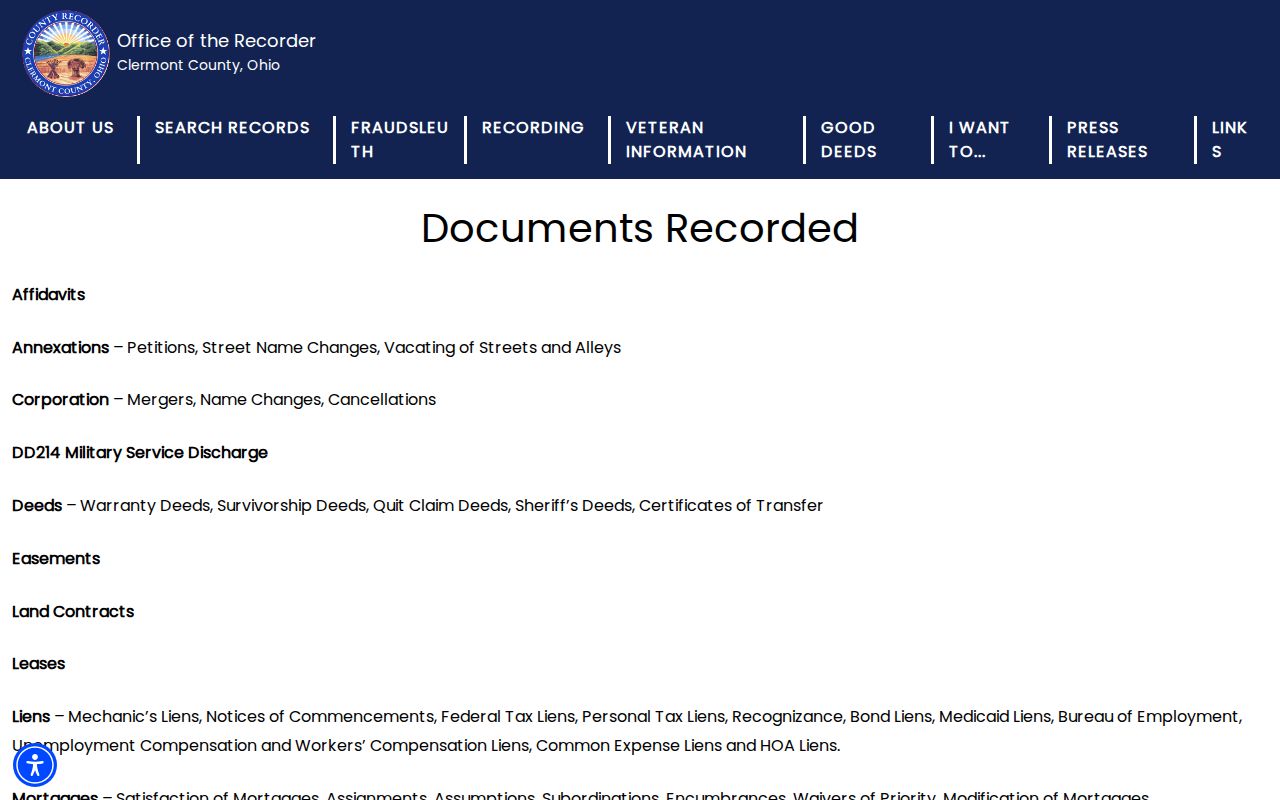
A street-name or road-vacation document can explain an address break only when its location and legal land reference match the property trail.
Union Township Previous Residents in Archives
The Clermont County Records Center and Archives is the strongest county fallback for an address trail that precedes a web index or needs retained historical material. It began in 1998 in the old Williamsburg High School, moved in 2005 to the old Municipal Court on Main Street in Batavia, and opened a climate-controlled facility in 2019. The center reports more than 10,000 paper boxes, 6,500 historical journals and plat books, and nearly half a million electronic records for more than 40 county offices.
That preservation history explains the local comparison between a web hit and a county record. CountyFusion is useful for documents recorded since 1980, but historic tax duplicates run from 1821 through 1991 at the Records Center, and its research material identifies older court, naturalization, partition, and journal holdings. An archive request should identify the creating office, property or party name, and date range rather than describing a broad search.
Source image: the Clermont County Records Center and Archives is the county’s archive access point.
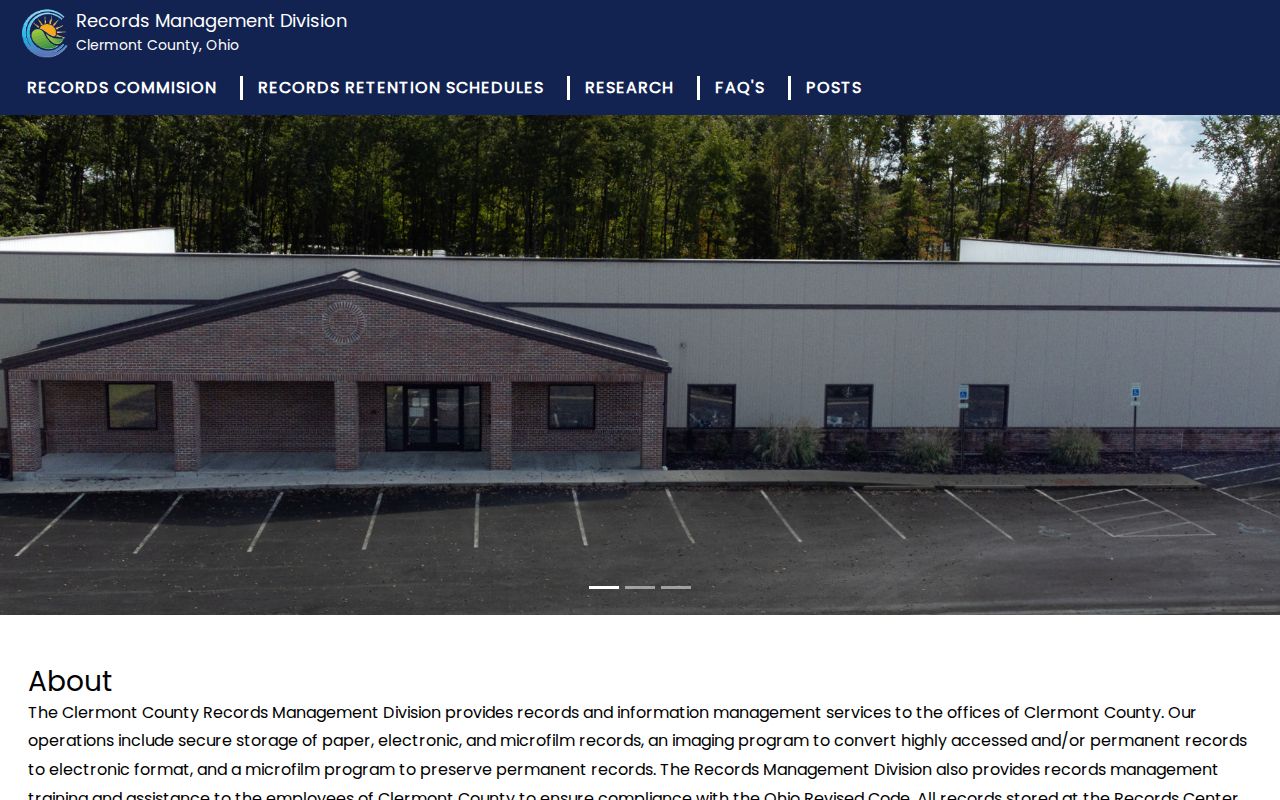
The archive is a documented continuation of the land and household trail when an online result ends before the needed period.
Limits on Union Township Previous Residents
Land records identify property transactions, not a complete history of who lived in every room. A rural directory may identify a household or land context, while a census records a household on its census date. Obituaries, cemetery records, probate estates, and marriage files can supply an endpoint or relationship lead, but they should be compared with dates and property records. Clermont County Probate Court holds marriage records from 1800 to present, while separate custodians manage estates, vital records, and other files.
Ohio’s Safe at Home Address Confidentiality Program can shield participant identity and address information from public release. Public research should remain focused on family history, estate and heir matters, property history, and civic context. Do not use a past-resident trail to track, harass, intimidate, or harm a living person.
Lawful use. Union Township previous-resident research supports personal, historical, and property questions. Respect protected address information and never use a record to stalk, harass, or harm anyone.